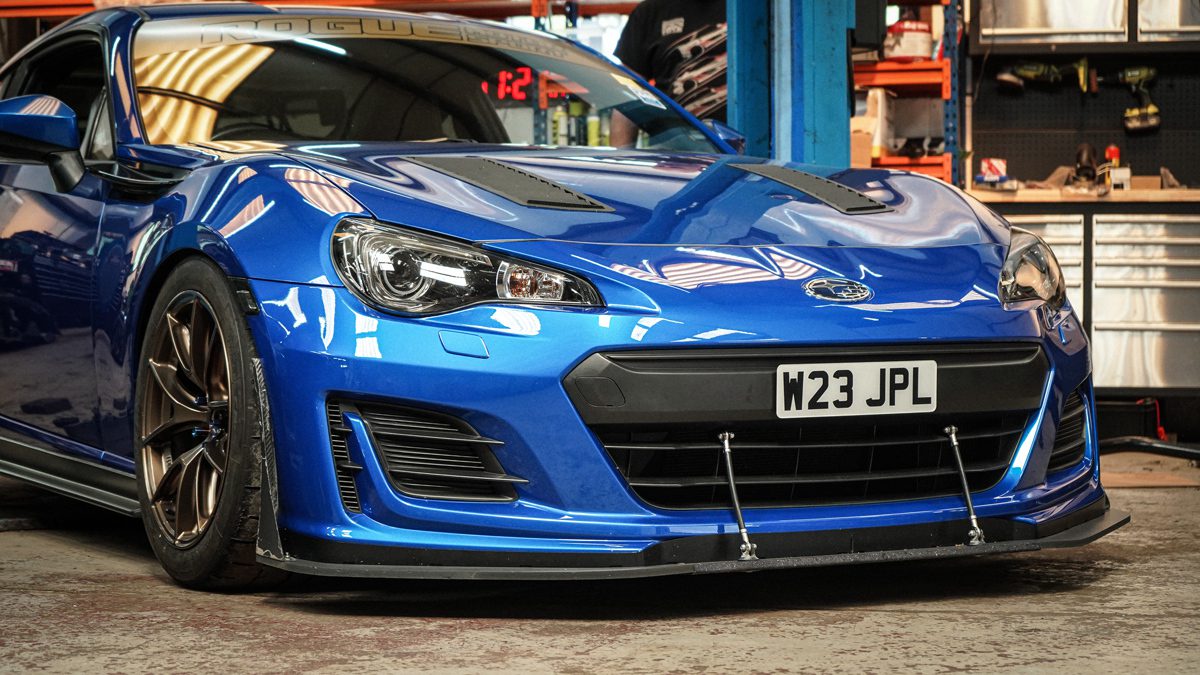
We 3D scanned a modified Subaru BRZ track car using a Hexagon Romer Arm and PolyWorks software, capturing key areas to support the design of a new oil sump and brake cooling duct.
Task 1: Oil Sump and Manifold Capture
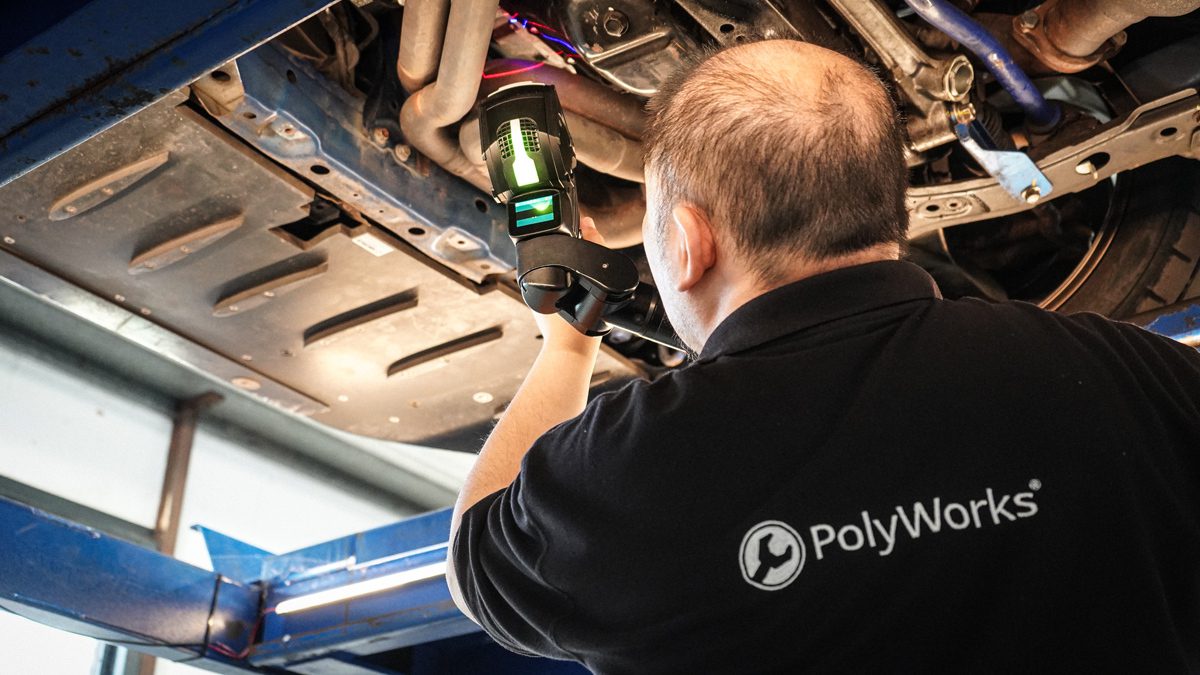
The vehicle was scanned while positioned on a four-post lift to capture the manifold and oil sump area of the heavily modified BRZ. Part of the front driver’s-side wheel and fender area was also captured to provide reference geometry for aligning subsequent scans. The objective was to support the design of a new oil sump that would fit beneath the existing aftermarket manifold. PolyWorks was used to create features to accurately locate the sump bolt-hole centres. Cylinders were also created to help construct data in areas that the AS1 on the Romer Arm was unable to reach.
Task 2: Suspension, Wheel and Brake Cooling Duct
The car was initially scanned while positioned on the ground, capturing the front driver’s-side wheel, part of the fender and part of the front bumper. These areas provided reference data for future alignment.
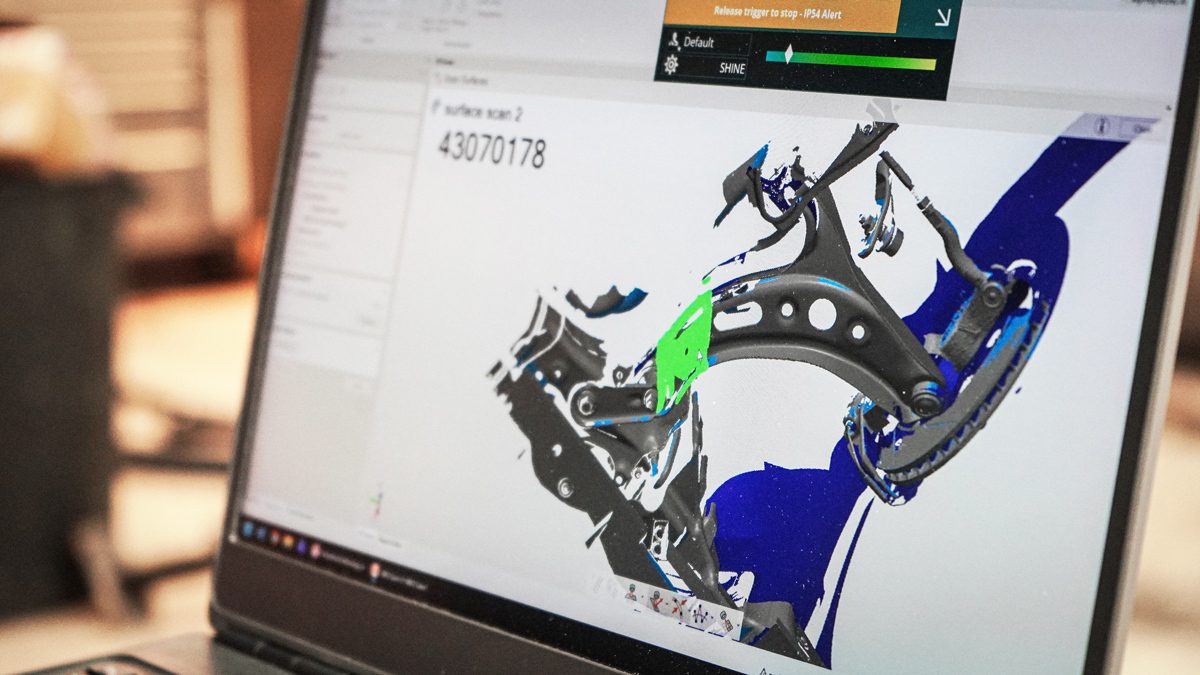
The vehicle was then raised on a two-post lift. The fender and part of the bumper were captured again before concentrating on the outside and inside of the wheel, along with as much of the suspension, control arms and surrounding components as possible.
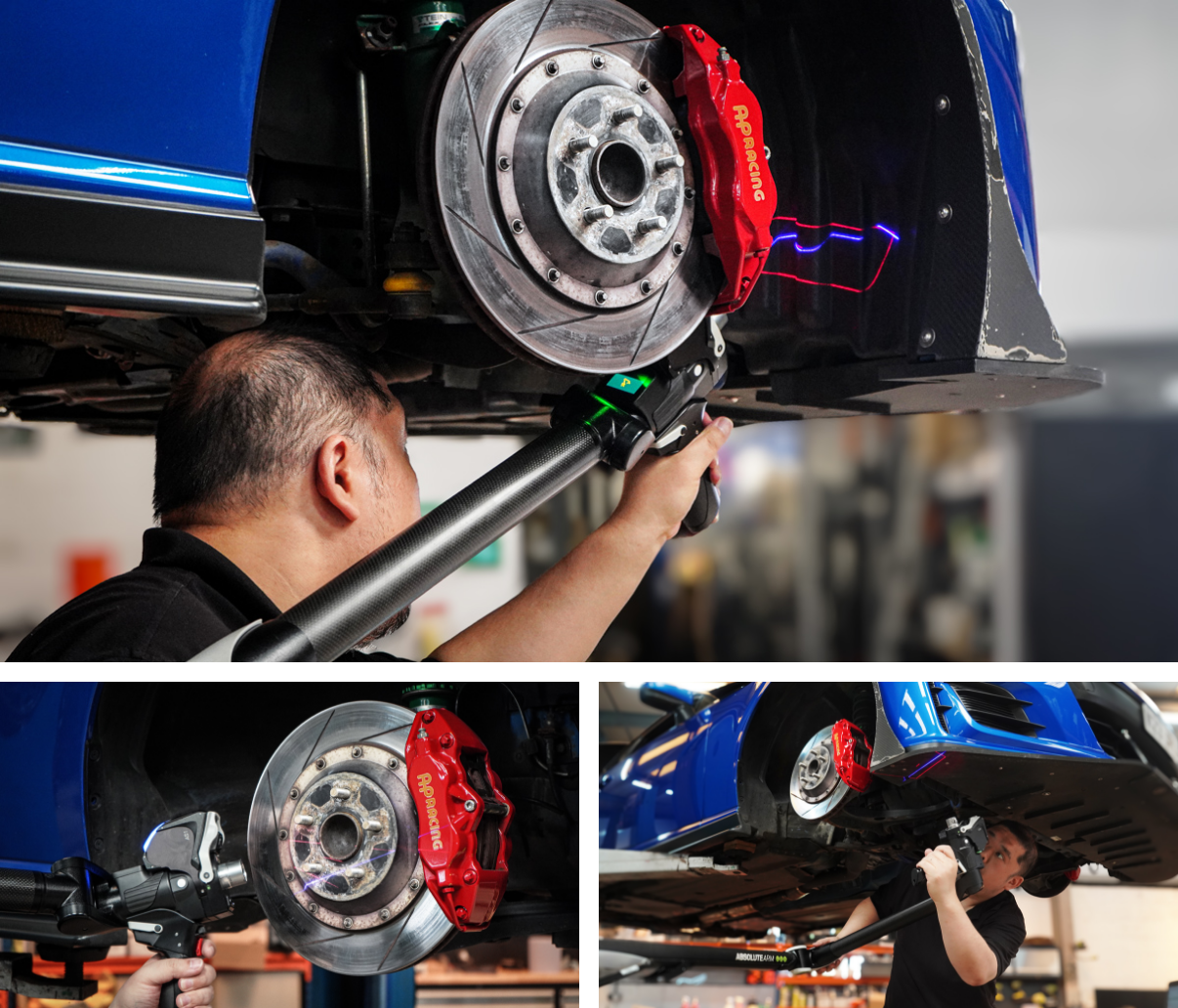
The wheel was then removed so that the wheel hub and brakes could be scanned, along with the outside and inside of the wheel while it was off the vehicle.
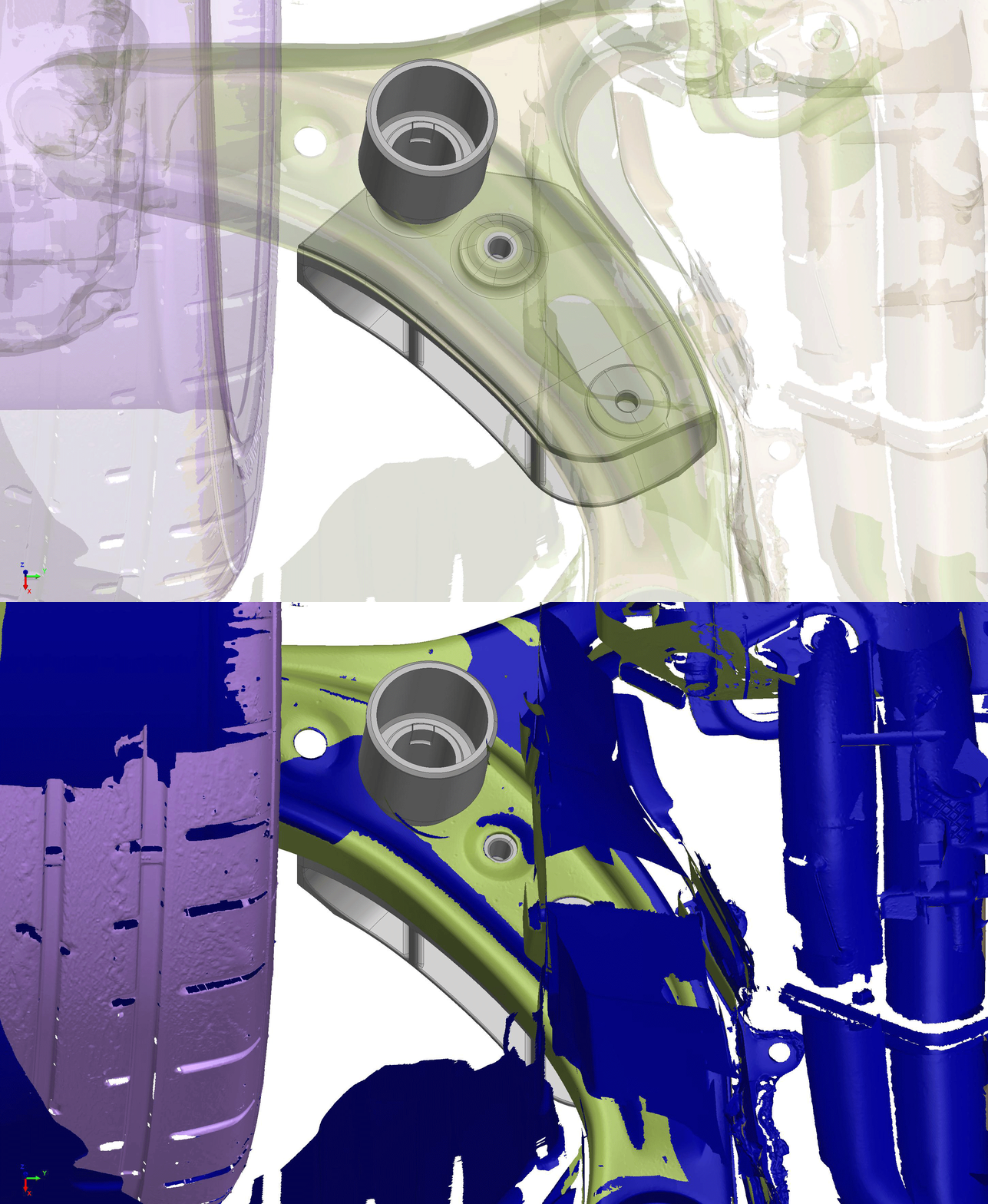
PolyWorks was then used to separate the moving components captured while the vehicle was in the air, allowing them to be aligned back into their correct positions with the vehicle on the ground.
This included separating the wheel from the hub, as the wheel would have moved significantly in rotation, camber and toe between its ground position and lifted position.
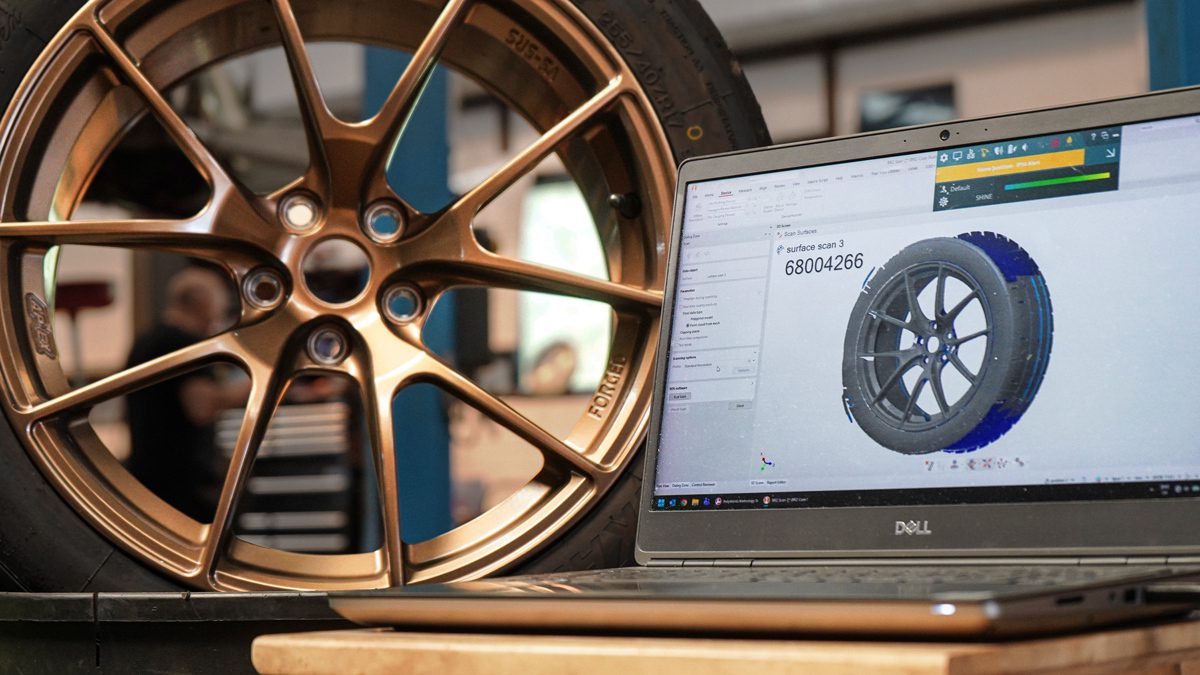
The hub was also separated from the control arm, while the control arm, drop links and other components were separated from the subframe. This was necessary because the hub shifts up and down and tilts as the suspension moves, while the lower control arm pivots around the subframe as the wheel travels through its range of movement.
Data from the previous scan carried out on the four-post lift was also used, as areas behind the wheel had been captured while scanning the manifold and oil sump.
Combining these datasets allowed us to generate a more complete scan of the vehicle while it was sitting in its natural position on the ground.
This provided the true position of the lower control arm and the areas behind the wheel, allowing a brake cooling duct to be designed that attaches to the underside of the lower control arm and directs a hose towards the brakes from behind.